SPECIALIZED RESTORATIVE TATTOO EDUCATION
Master precision pigment formulation, undertone science, and delicate micro-deposit techniques. Elevate your practice with clinical-grade color harmony for mature, healed tissue.
Strictly Educational · Non-Medical Restorative Curriculum · Flexible Payment Plans Available
COURSE SPECIFICATIONS
PROGRAM DETAILS
Essential curriculum investment, time commitment, and daily studio schedule breakdown.
DURATION
2 DAYS
Comprehensive Studio Immersion
TUITION
$3,200
$1,600 Deposit to Secure Seat
HOURS
9:30 AM - 3:30 PM
Daily Practical Clinical Sessions
MODALITY METHODOLOGY
TWO APPROACHES.
ONE SPECIALIZED FOCUS.
Mastering the nuanced distinction between pigment integration and cellular texture refinement to achieve seamless cosmetic harmony.
TECHNIQUE I · COLOR FORMULATION
Scar Camouflage Artistry
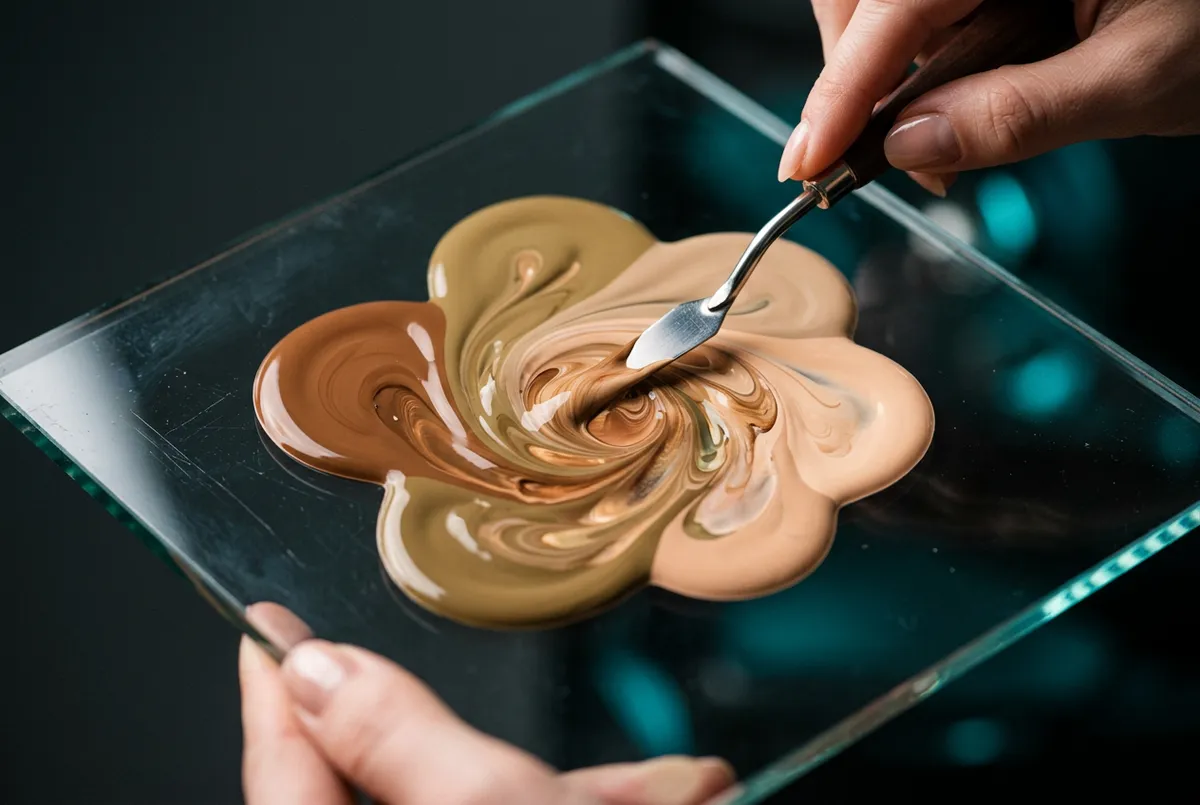
The delicate science of formulating custom skin-tone pigments to visually blend stable, healed tone variations. By layering micro-droplets of customized color directly over pale or uneven areas, artists restore chromatic balance and uniformity to the surface appearance.
- Precision color theory & undertone neutralization
- Custom micro-pigment blending on optical glass
- Aesthetic depth control for natural light diffusion
TECHNIQUE II · TEXTURE REFINEMENT
Inkless Revision Protocol
A non-pigment approach that optimizes skin surface smoothness and softness. Utilizing specialized serum infusions and micro-channeling techniques, this modality encourages the natural rejuvenation of texture and flexibility prior to or independent of tone restoration.
- Serum delivery & natural revitalization formulas
- Skin tone readiness & client candidate analysis
- Texture smoothing without permanent pigment deposit
COLOR ARCHITECTURE
SKIN TONE IS PART
OF THE TECHNIQUE.
Flawless restorative camouflage is never an exercise in finding a shade that simply looks close on the palette. True optical harmony requires calibrating pigment undertones to vascular depth, cellular density, and surrounding light refraction.
- Fitzpatrick phototype stratification and undertone matching
- Spectrophotometric adjustment for healed dermal shift
- Viscosity and dilution protocols for micro-deposit precision
PROTOCOL & CANDIDACY
KNOW WHEN TO PROCEED.
True restorative excellence begins long before pigment touches the dermal surface. Master practitioners distinguish themselves not merely by technical application, but by the disciplined discernment to assess tissue maturity, recognize contraindications, and establish uncompromised aesthetic expectations.
Tissue Maturity & Stability
Evaluate healed tissue from prior procedures or injuries. Candidates must present fully stabilized, non-erythemic tissue exhibiting complete cellular rest before any restorative micropigmentation is initiated.
Stretch-Mark Suitability
Analyze striae width, depth variation, and structural elasticity. Learn how to distinguish between areas primed for optical tone matching versus those requiring texture conditioning.
Expectation Architecture
Restorative artistry centers on visual optical illusion and tone harmony rather than curative promises. Conduct consultation protocols that align client expectations with realistic, high-fidelity aesthetic outcomes.
RESTRICTED ASSESSMENT PROTOCOL • LEVEL 3 CLINICAL DISCERNMENT
PRACTICAL TRAINING FRAMEWORK
LEARN THE TECHNIQUE.
PRACTICE THE PROCESS.
Restorative tattoo mastery demands tactile precision and disciplined repetition. Our structured simulation curriculum allows students to refine depth control, stretch mechanics, and undertone matching before clinical consideration.
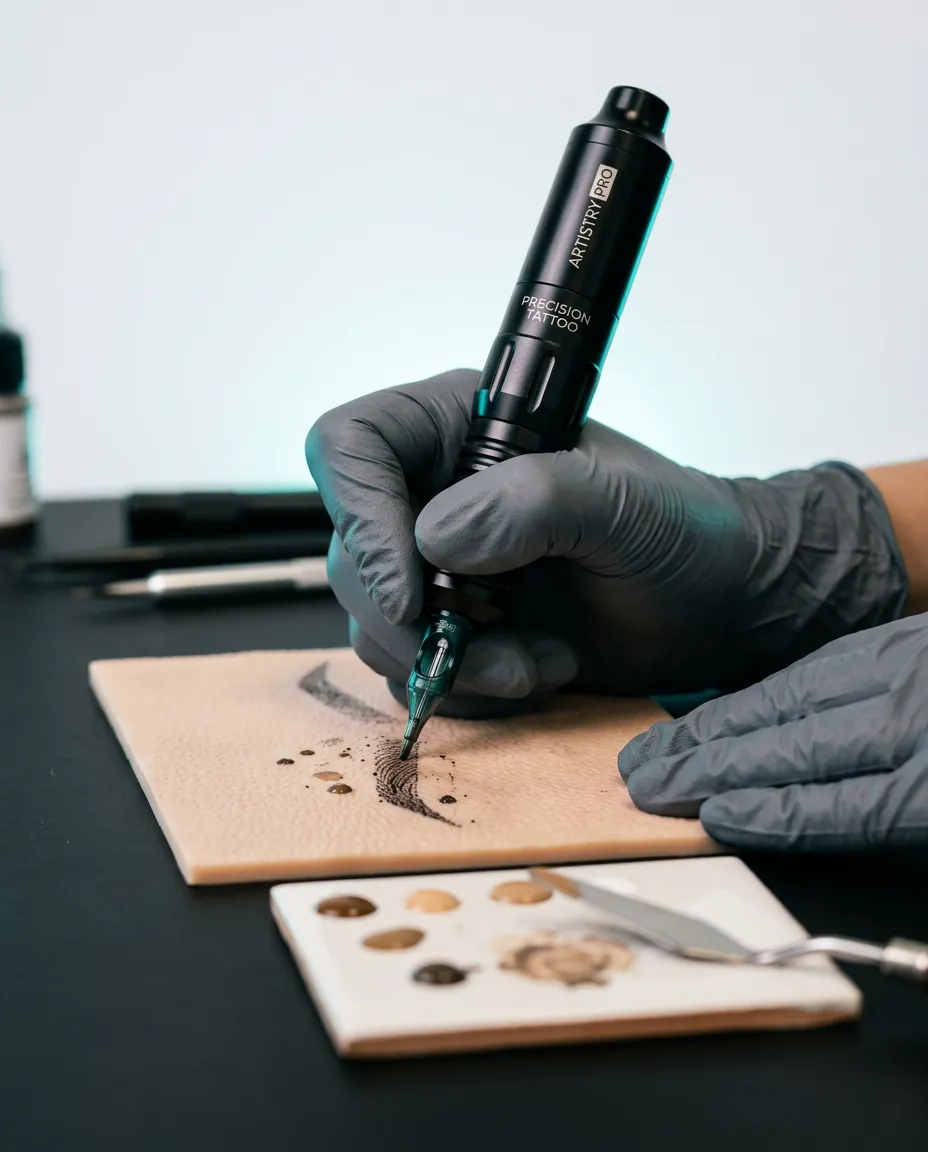
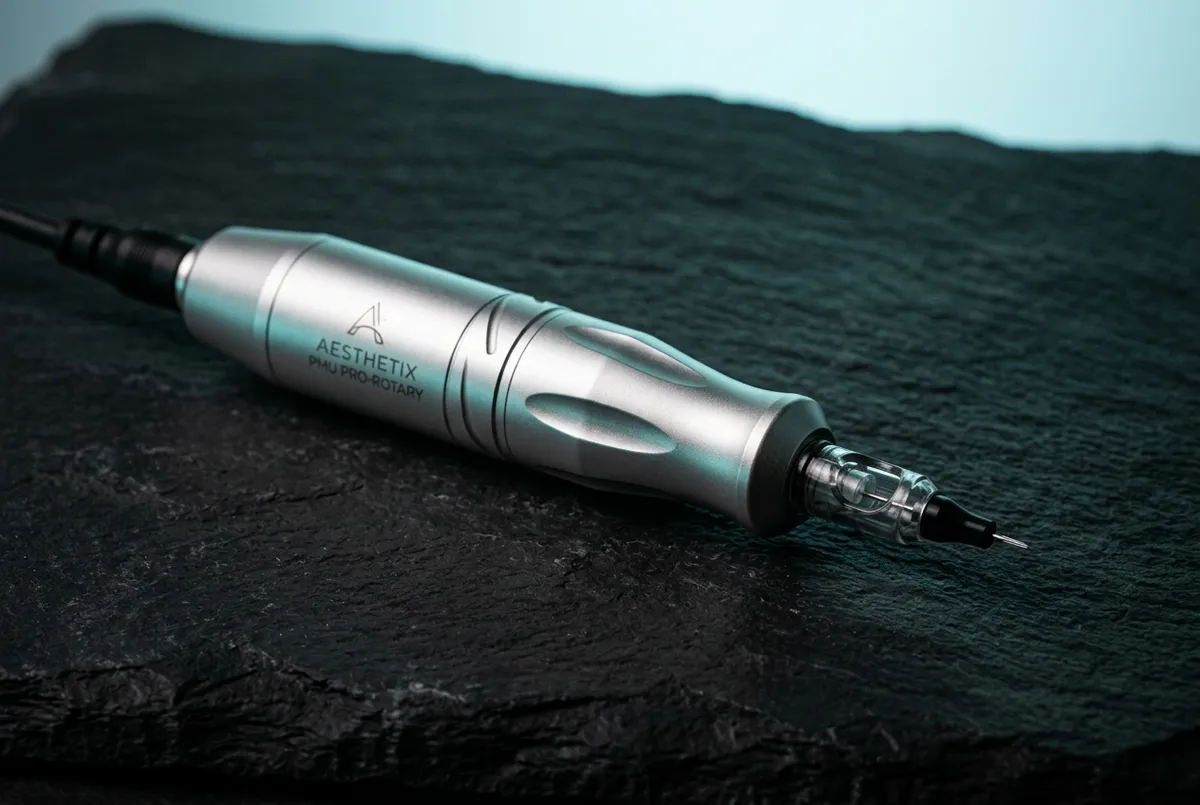
Studio Calibration: Multilayer synthetic skin substrates calibrated to replicate real epidermal needle drag and pigment diffusion resistance.
01 / INSTRUCTOR-GUIDED PRACTICE
Machine Ergonomics & Depth Precision
Work side-by-side with master practitioners to master hand posture, three-point skin stretch tension, and needle stroke speed on multilayered silicone. Real-time feedback eliminates needle drag and prevents inconsistent pigment deposits.
02 / PIGMENT SELECTION & COLOR DEVELOPMENT
Glass Palette Mixing & Undertone Matching
Formulate custom pigment recipes under controlled clinical spectrum lighting. Learn how inorganic and organic restorative pigments settle beneath the dermal barrier, predicting healed shifts across Fitzpatrick types I through VI.
03 / TECHNIQUE DEMONSTRATIONS
Live-Angle Protocol Breakdowns
Observe high-definition, macro-angle demonstrations covering feathering, edge dissipation, and serum delivery for inkless texture revision, followed by immediate execution on progressive density training modules.
CLINICAL TRAINING POLICY: To protect client skin integrity and uphold educational rigor, live model participation is determined solely by instructor assessment during synthetic practice modules. AAC does not guarantee every student will perform on a live model.
CANDIDATE QUALIFICATIONS & PREREQUISITES
WHO IS THIS PROGRAM FOR?
Restorative camouflage requires high-level dermal comprehension and rigorous needle control. We review every application carefully to ensure participants possess the foundational aptitude necessary for clinical excellence.
PROFILE 01
PMU & Cosmetic Tattoo Artists
Practitioners seeking to advance from standard cosmetic micropigmentation into high-demand paramedical camouflage and tone-matching disciplines.
- Active rotary device competency
- Demonstrated dermal depth control
- Expansion into restorative services
PROFILE 02
Paramedical & Restorative Artists
Established restorative professionals aiming to master dual-modality protocols, non-pigment revision techniques, and advanced color-theory formulation.
- Existing restorative foundation
- Interest in inkless revision modalities
- Advanced tone-matching mastery
PROFILE 03
Licensed Estheticians & Nurses
Skincare specialists and aesthetic practitioners transitioning clinical skin anatomy proficiency into specialized scar restoration and corrective artistry.
- Active aesthetic or clinical license
- Deep skin histology understanding
- Commitment to high-standard ethics
ADMISSION POLICY: Cohorts are capped at strict ratios to guarantee individual clinical coaching. Prior machine proficiency or active aesthetic licensing is verified during application review.
OPTIONAL POST-GRADUATE REFINEMENT
MORE PRACTICE AFTER TRAINING?
AAC Guided Practice Clinics offer an optional mentorship pathway for graduates seeking further hands-on repetitions under direct master instructor supervision. Designed for practitioners wanting dedicated case critique and technical refinement prior to fully independent client practice.
- Completely optional next step exclusively for AAC course graduates
- Tuition is separate from core certification curriculum and incurs additional fees
- Direct 1-on-1 technical critique and needle-depth oversight during clinical passes
- Model matching is based on clinical availability (specific models not guaranteed)
Graduate Clinic Schedule
View upcoming clinic dates, chair availability, and add-on fee schedules for certified alumni.
Strictly limited to 4 practitioners per clinic session
TRANSPARENT TUITION SCHEDULE
TUITION & NEXT STEPS
A clear, predictable pathway to certification with structured milestones and tailored financing solutions.
Enrollment Deposit: Secures your clinical station and unlocks immediate access to the digital color theory preparation modules.
Remaining Balance: Settled exactly one week prior to in-person clinical training dates.
EXCLUSIVE RESTORATIVE CERTIFICATION
Begin Your Restorative Artistry Practice
Master both precise skin-tone pigment matching and inkless revision protocols. Graduate with complete clinical confidence, dedicated instructor feedback, and the technical edge needed for high-demand restorative aesthetic services.
Intimate Cohort Sizes • Flexible 0% Interest Tuition Options Available • Professional Certification
Academy of Advanced Cosmetics
Professional certificate education in permanent makeup, cosmetic tattoo, paramedical tattoo and specialty techniques - built on real-world experience and small-class instruction.
Academy of Advanced Cosmetics
1875 Old Alabama Road, Suite 625
Roswell, Georgia 30076
770-230-1703 (CALL or TEXT)
[email protected]
Curriculum & Navigation
Connect With AAC


Stay connected after graduation with ongoing support and a private alumni community.
© 2026 Academy of Advanced Cosmetics. All Rights Reserved. | Privacy Policy | Terms of Service | Institutional Disclosures